

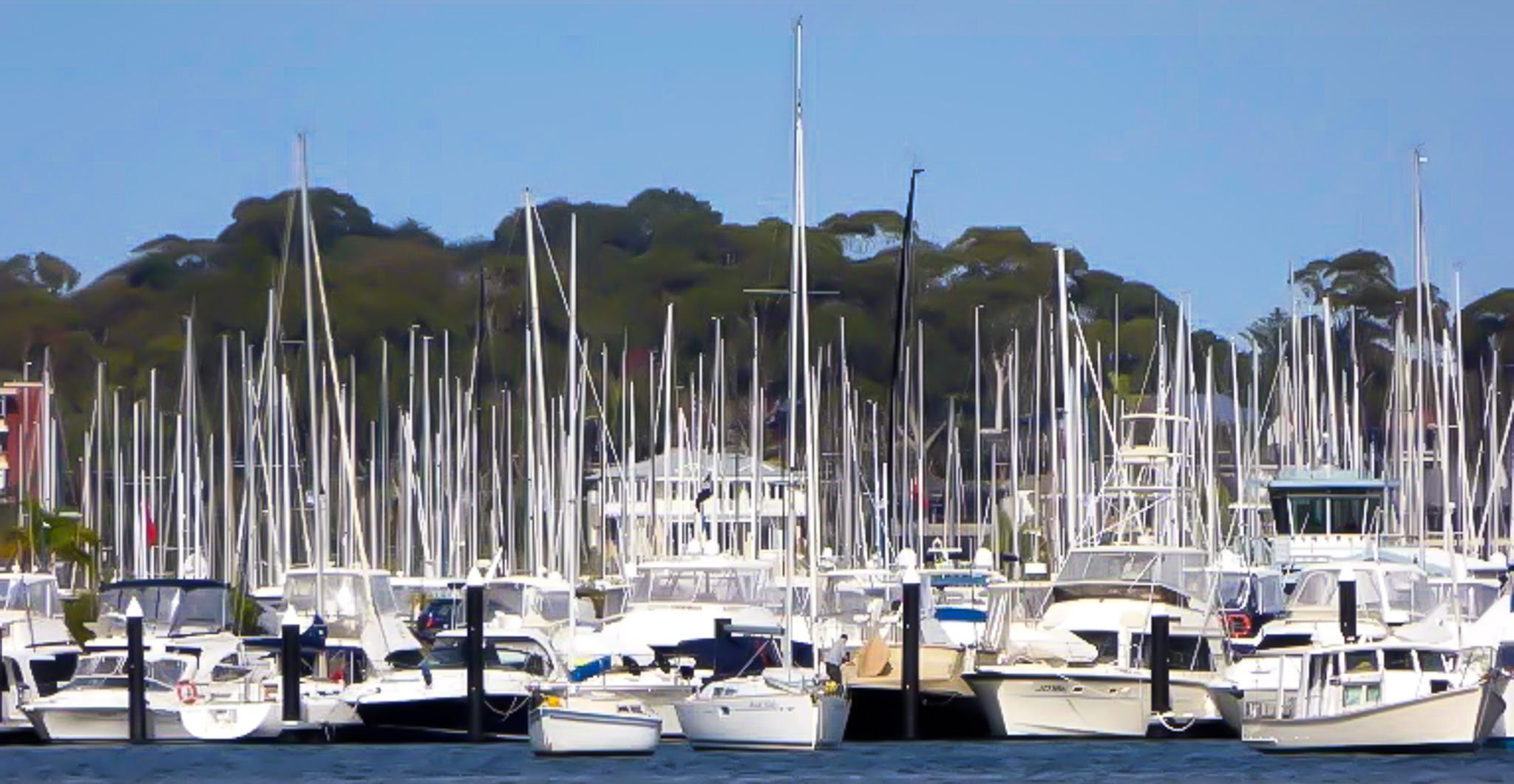
Life aboard a yacht comes with its own unique language. As I write a post about the questions we are most frequently asked, I realise that some of the terminology I use may be unfamiliar to those without a sailing background or to beginners dreaming of a liveaboard life—the very audience I am writing for.
This post aims to share the words and phrases that have become part of our everyday life. Some terms make sense right away, while others may sound like code until you’ve spent time out at sea. Here’s a collection of the lingo we commonly use, whether we’re anchored in a quiet bay, hoisting sails, or setting off on a more extended passage.

Anchoring & Staying Put
Anchor, Pick, or Hook: “Drop the pick” refers to anchoring the boat. There’s nothing quite like the feeling of the boat settling back against the chain, gently swaying with the breeze.
Dragging: When a ship’s anchor loses its grip on the seabed, it causes the vessel to drift from its intended position because of external forces, such as wind and current, exceed the anchor and chain’s holding power.
Anchor Watch: When someone says, “They are on anchor watch tonight,” it means they are staying awake to ensure that the boat is not dragging. This is usually unnecessary if the anchor is well set, but it may be required in an anchorage with poor holding in bad weather. Although we have rarely had to do an anchor watch, we have occasionally needed to set an anchor alarm.
Anchor Alarm: “To set the anchor alarm” means to use an alarm that uses GPS positioning to alert you if the boat begins to drag. Anchor alarms can be integrated into a boat’s chartplotter, a standalone physical device, or a mobile app.
Holding: Used in speech when anchoring, “the anchorage has good holding in mud”. That’s sailor-speak for how well the anchor digs in, indicating that it should hold securely. Some sailors believe that a rode-to-depth ratio is all you need for anchoring, for example, 5:1 — meaning for 10 meters of water, you would let out 50 meters of anchor line. However, there is more to anchoring than just this ratio. If you want to sleep soundly without doing an anchor watch, it’s essential to learn how to set your anchor properly. I will cover this in a future sailing how-to post.
All-weather anchorage: A location that offers protection from swell and wind, regardless of their direction.
Mooring: The act of securing a vessel to a fixed buoy. Instead of anchoring in Thailand, we prefer to use a mooring, especially when visiting islands, as anchoring can damage coral reefs. Once we are moored, we usually dive in to inspect the condition of the mooring.
Rafting up: Refers to the practice of two or more boats tying up next to each other, sharing anchors or moorings. Sailors usually raft up for social reasons, such as having a floating party. However, it can also be a practical solution when there is limited space in an anchorage.
Getting Underway
Shipshape: Everything stowed neatly in its place. Essential before you head out, unless you like chaos.
Stow: To put things away securely so they don’t become projectiles once you’re moving.
Up anchor: “Are we ready to up anchor?” When one of us asks this, we confirm that the boat is shipshape and ready to leave the anchorage. It’s time to retrieve the anchor and get moving.
Underway: Once the anchor is up and we’re moving. It doesn’t matter if we’re motoring or hoisting sails; we are underway.
Weather window: The term “waiting for a weather window” refers to the practice of delaying departure from a port or anchorage until favourable weather conditions are present. The duration of the weather window we seek will depend on the distance we need to sail to reach a suitable anchorage or marina. We use Windy (pictured below) and PredictWind to watch the weather.
On Passages
Passage: More than just a sail, this is a longer trip between destinations. It might be an overnight hop to the next island, or a week-long crossing on the open sea.
ETA: Estimated Time of Arrival. Our expected time of arrival depends on wind and sea conditions, which can affect the vessel’s speed and, consequently, the ETA.
Logbook: This is a record of passage, where we document the following information: time, position, course, speed, distance covered since the previous entry, wind speed and strength, sea conditions, swell, visibility, engine hours, and incidents that occur.
Position: This refers to our exact location on the planet, expressed in terms of latitude and longitude.
Nautical Mile: A unit of distance used by sailors. One nautical mile (1 NM) is equivalent to 1.852 kilometres.
Knot: A measure of speed at sea, expressed in nautical miles per hour.
1. Speed of the vessel is referred to in knots, for example, “we are sailing at 6 knots.”
2. Wind speed can also be described in knots, for example, “It’s blowing 20 knots.”
Nav lights: It’s important that we turn on our navigation lights at night, and we hope that other vessels do the same. The red and green navigation lights indicate the port (left) and starboard (right) sides of a boat. This helps you determine whether another boat is approaching, moving away, or crossing in front of you.
Sail Handling
Trim: Adjust the sails for speed and efficiency.
Tack: Turning the bow of the boat into the wind to bring the wind onto the other side of the boat. It also refers to the side you’re sailing on, e.g., “We’re on a starboard tack”, meaning the wind is coming from the starboard side.
Gybe/Jibe: Turning the stern of the boat through the wind. This manoeuvre can be smooth if executed properly, but it may become chaotic if not well-controlled.
Beam reach: Sailing with the wind directly on the side. It is one of the favourite sailing angles as you can generally get maximum speed and comfort, especially in a catamaran.
Close-hauled: Sailing as close to the wind as possible.
Running: Sailing with the wind directly behind the boat, also known as “running downwind.”
Ease: To let a line out smoothly, as in “Ease the jib sheet.”
Lay it off: Steer away from the wind.
Point up: Steering into the wind. One example would be when I point into the wind so Dwayne can hoist the main sail.
Reef: Reducing sail area in stronger winds. It is best to do this before you are hit by strong wind, but it is not always possible. We have three reefing points on our main sail, allowing us to use a single reef, a double reef, or a triple reefed main.
Furl: This refers to the process of rolling up the sail, which can be done either on the forestay or into the mast or boom. We have a furling headsail, but we do not have a furled mainsail; instead, we use a boom bag.
Boom bag: This is the sail cover attached to the boom and held in place by lazy-jacks, into which the mainsail is lowered.
Heave to: A manoeuvre that slows the boat down and keeps the bow slightly into the wind and swell to reduce the boat from rolling. It allows it to sit relatively comfortably in bad weather.
Sea Conditions
Seas: Refer to the surface conditions, which can vary, including choppy seas, flat seas, and messy seas.
Swell: This refers to waves generated by strong winds from storms or weather systems located far away. You can experience swell even with little or no local wind.
Following sea: These are waves that come directly from behind your position.
Quartering sea: This refers to waves that approach at an angle from behind.
Beam seas: Refer to waves striking directly against the side.
Head seas: These are waves coming straight at the bow.
Sundowners & Sayings
Permission to board: A traditional maritime phrase used as a courtesy to request access from the person in charge to board a vessel, akin to knocking on a door.
Sundowners: Enjoying evening drinks in the cockpit as the sun sets. A daily ritual that sailors everywhere honour.
Fair winds and following seas: A traditional sailor’s blessing, wishing someone the perfect weather conditions for their journey.
✨✨May the wind be kind, and the seas push you gently toward your next adventure.✨✨
During our travels, we use Booking.com, Wise, Simify, Get Your Guide, Trip Advisor, Vrbo, Expedia, BookABach, Stayz, Hotels.com, Agoda, TourRadar and AirAsia.
More from our “Sailing how-to” series.
Sailing how-to: Boating Terminology
Like this post? Please share or pin using the image below… thank you!





Leave a Reply
Your email is safe with us.